Showing posts with label Melia Dubia ( Tamil: Malai Vembu ). Show all posts

Sunday, February 3, 2013

Trees as fulcrum for rural development - by Dr.G.Kumaravelu

Dear friends,


I have received an interesting email from The Great Dr.G.Kumaravelu, former State Planning Commission member and former PCCF, a visionary of our times on Sunday, 3rd February, 2013, 1:27PM. The letter is written in his usual inimitable style, truly expressed his concern for not only farmers but also environment and Govt. policies. I am sharing his mail (though personal) with our readers since keeping it in my ‘inbox’ is not going to serve any purpose. I feel really happy that we, the farmers, have these kinds of rare breeds among us with penchant for ‘upliftment of farmers’. 

The letter:

"It is high time that the Governments mandate through their Industrial policy that at least 33% of Industries in the states to be established in future should use BIOTIC RAW MATERIAL like herbs, shrubs and Trees than ABIOTIC.

Now if you introspect, the fact that more than 90% of industries existing are using metals, chemicals and minerals like stones, sand, lime etc. The more affluent the society becomes, it becomes more effluents ridden. This causes more pollution for which we are scratching our brain to find appropriate solution and what is worse is that this malady remedy dilemma gets perpetuated. If trees are tailored for specific end use and through appropriate post harvest technology, full tree utilization is achieved. We can certainly make them to exemplify as fulcrum for rural development.

We should take into consideration the carbon footprint and the water foot prints in the choice of species. The govt should encourage (apart from the present encouragement given to paper pulp), non-effluent industries like veneer, plywood, particleboard, compressed wood, MDF (Medium density fibre board), furniture and construction wood fabrication units.

Apart from the above, encouragement should be also given to de-centralized electric power production units which adopt gassifier technology. The resultant bio-char can be impregnated with cow urine and beneficial microorganisms like azospirillum, phosphobacteria, psudomonas, Trichoderma viridi, VAM Etc.,. Application of this enriched biochar in the field will enhance the productive potential of our dead and desiccated soils which are deprived of essential  nutrients, lost through leaching.

I had proposed COGENERATION OF FOOD WITH WOOD, when I was in planning commission. I am glad to see that the programme of ‘TREE CULTIVATION IN PRIVATE LANDS (TCPL)’ started by me while in service had picked up. I am aware that much more have to be done in this. Enthusiastic tree lovers and cultivators like you should be given more opportunity to contribute more. I wish more role for the members of tree growers association in govt programmes.

I am presently concentrating on screening best phenotypes of Melia dubia suitable for acid soils to alkaline soils. I am more concerned with the steady raise of TDS (Total dissolved Solids) in the bore-well waters of TN.  My own farm bore well water has more than 4000 TDS. Less than 500 is desired for trees. I have one Melia dubia grown to 125 cm gbh in 4000 TDS WATER in 7.5 yrs in my farm which had been cloned. We have to screen and select plus trees for problem soils and water.

I AM NOW CONCENTRATING ON SELECTION AND SCREENING OF SUITABLE FAST WOOD SPECIES AND PHENOTYPES THAT ARE FIT FOR BUND PLANTING SUITABLE FOR VENEER. That can give more profit for farmers. ..one final good news. I had selected one phenotype of Melia dubia which has grown to 8 mts ht with 25 cm gbh in 6 months after planting.....I am cloning that....THAT IS HOW WE CAN MAKE TREES TO EXEMPLIFY AS A FULCRUM FOR RURAL DEVELOPMENT...i am dabbling with two more species which will give more profit ....Let us try our best. 

I CONGRATULATE YOU AND THROUGH YOU ALL THE TREE LOVERS. LATER I WILL WRITE TO YOU HOW WE CAN ENPOWER AGRI ECOSYSTEM THROUGH TREE PLANTING".
WITH WISHES,
DR.G.KUMARAVEL.

Shared to farmers, scientists, environmentalists and policy makers by,
A.Vishnu Sankar.

Sunday, January 20, 2013

Apical shoot deformity in Melia dubia (Malai Vembu, Konda Vepa, Hebbevu) plantations:

Dear Friends,

Melia dubia (Malai Vembu, Konda Vepa, Hebbevu) is now in lime light only because of its tremendous initial growth i.e., during first two years even in marginal soils with sparse irrigation. Its growth after that initial period vastly differs from field to field and the current field reports are not that much encouraging in many parts of Tamilnadu, Andhra and Karnataka states.

Growth variation is so huge that even in my field, girth increment of some 4 year old trees are 200% more than 8 year old trees. Since too much hype has been generated already, reality will sink in slowly and in the coming years farmers will come to know about the type of soil required, soil depth, climate, tolerance to maximum temperature, drought tolerance and water requirement for successful cultivation of Melia dubia.   

Though drought tolerance of this tree is moderate, it becomes ‘stunted’ during prolonged droughts. Tree will shed all its leaves and the growth stops during extreme and prolonged hot conditions. Do not plant in Alkaline soil, clay, sodic soils and wherever there is poor soil depth. Melia grows well in irrigated (weekly once) soils where pH is below 7.5.

All the plants in a field will not grow uniformly and the trees planted in bunds and near water channels exhibits rapid growth and attain enormous girth within 4 - 5 years. The presence of this kind of + trees though in small percentage are brought to centre stage by ruthless traders to make quick money. The pictures and Videos of young yet enormous Melia trees you find in 'Net' are carefully selected picks from the above +trees among a vast lot of average plants. So, don’t get distracted and be realistic in your estimates as the law of averages will always come to play even in your field.
  
‘Apical shoot deformity in Melia dubia’:
I happened to notice in my field last year that apical tip (actively growing top most tip of a plant) of about 5% to 8% of my Melia trees were found to be deformed. On closer examination I could not able to see any pest infestation (bore hole) leading to canker or any fungal infestation. In the later months I happened to see the same mysterious deformity in many parts of Tamilnadu and Karnataka states. I showed this condition to CCF and ACCFs of Forest Extension Department in their own demo plots itself in various districts.

The affected tree exhibits no vertical growth and for identification purpose I named it as ‘Apical shoot deformity in Melia dubia’. The affected plant part is usually about 1.5 to 2 feet, swollen, black in colour, rigid, one third of the length curved like a sickle or coiled.  A tree planted in my backyard first showed this deformity about 2 years back. Now, the growing tip of lower most side branch of the same tree is also got affected.

Picture of deformity in side branch:

At the time of my visit to Forest College Research Institute (FCRI), Mettupalayam, Coimbatore, Tamilnadu on May, 2012, I pointed out the same deformity of apical tip in some Melia dubia trees  (2 %to 3%) in their demo plots also that had not been observed by them earlier. The photos I had with me at that time were not good (long shots) so requested the FCRI people to take close up shots since they have a very high portable aluminum ladder to reach the tree tops easily. I fervently hoped that with all the correct persons, knowledge, equipment and lab, FCRI can find the reason and suggest a remedy which will definitely benefit poor ‘Melia tree grower’. After continuous follow up I came to know that exact cause of this condition is still not identifiable and they are also receiving same complaints from many Melia fields in T.N.
Then I happened to hear from few scientists of Institute of Forest Genetics and Tree Breeding Institute (IFGTB), Coimbatore that they have also observed this when they visited some pest infested Melia fields (Melia plantations affected by ‘Stem borers’ and ‘root grubs’) for on the spot assessment. According to them the scale of ‘Apical shoot deformity’ is up to 10% in some fields and their initial studies have revealed that this attack is neither due to insect nor due to fungus. Lab tests were going on to assess whether this is a viral infection since severely infected plots are located adjacent to fields with gourd family (Cucurbitaceae) vegetables which are a major source of virus pathogens.
Let these research institutions come with their findings at their leisure. We can not blame them since they don’t have virus testing facilities in their labs and even If they identify the cause for this deformity it has to be proved scientifically, has to be documented, corroborated by senior scientists before press release.

May be this deformity is due to physiological or environmental factors also. I kindly request our knowledgeable readers and ‘Melia growers’ to come out with their view. May be some of you might have invented cure for this infection. Speak out !, since you are the correct person to judge the cause and suggest remedy for this mysterious ‘Apical shoot deformity in Melia dubia’.

Regards,

A.Vishnu Sankar

Sunday, July 15, 2012

Insect pests of Melia dubia (Malai Vembu in Tamil, Hebbevu in Kannada, Konda Veppa in Telugu)

Dear Friends,

The time has come I think, to discuss the kind of pests that normally attack Melia dubia. To clear the doubts of our farmer friends, I have used here some pictures from the presentation of Dr.A.Balu, Scientist, Forest Protection Division, IFGTB, Coimbatore. You won't ask questions I hope, since they are from the most authentic source. Thanks to Dr.Balu on behalf of all of you.


Stem borer attack on Melia was already discussed in this blog. Click to revisit.

Please click on the pictures to have a better enlarged view.

Sap suckers : 1) Mealy bug attack in Melia dubia: 

Sap suckers : 2) Thrips attack in Melia dubia: 


White flies, Beetles and Leaf eating Caterpillars attack on Melia dubia:
To know about Mechanical, Cultural, Behavioural, Botanical, Biological and 

Chemical control of all the above Sucking pests and leaf eating caterpillars 

please visit: Ppt presentation on Integrated Pest Management (IPM) by 

(the same author) Dr.Balu, a renowned Entomologist. The above Ppt

presentation is also uploaded in top right side of this blog which can be 

used as a ready reckoner by our readers for the control of Insects and 

diseases in almost all the crops. 

Regards,
A.Vishnu Sankar.

Wednesday, May 23, 2012

Melia dubia for Biomass power production:


Dear friends,

"...Treat wood on par with food"...,

"...change from 'Hydrocarbon economy' to 'Carbohydrate economy'.."

"...Fast woods better than Fast foods"

"...Civilizations flourish in fertile soils' and diminish in depleted soils'.."  

"...policies to lift 'Primary sector' from the 'Tread mill' and place on 'Escalator',

"...cultivation and utilization of trees as an economically viable, ecologically    empathetic, environmentally ameliorative and aesthetically acceptable..." 


By now you might have guessed the person who cleverly uses the likes of above keywords and key phrases to deliver a punch to get the attention of the listeners. He is none other then our Dr.G.Kumaravelu, former Indian Forest service Officer and a well known Forest and tree scientist in India. 

He is the person who introduced Melia dubia for economical upliftment of farmers and the main driving force to popularize the concept of using Melia dubia for biomass power generation.
Trees suitable for biomass power generation should have the following characteristics: Fast growing, drought tolerance, tolerance to grow in all types soil, coppice capability, short gestation period of 2-3 years, with high calorific value, less ash content Etc.,

Casuarina junghuhniana, Casuarina equestifolia, Eucalyptus, Melia dubia, Leucaena leucocephala (Subapul), Prosopis juliflora (Seemai karuvel / Vaeli karuvel in Tamil), Bamboo are viable source of feedstock for combustible type Biomass power plants.

Some major companies, who have established their units in Ramanathapuram, Pudukottai, Sivaganga, Virudhunagar, Tirunelveli and Tuticorin districts with the intention of using Prosopis Juliflora which is seen almost everywhere in Tamil Nadu, as their main biomass material are feeling the pinch now with the high cost and non availability of feedstock. It is not an exaggeration to mention here that many of the biomass power plants had become economically unviable and had to be shut. 

The time has now come for them to establish energy plantations, announcing  'Minimum Support Price' and entering into 'Buy back agreements' to infuse confidence among the farmers.

According to Dr.G.Kumaravelu, Melia dubia (Malai Vembu in Tamil, Hebbevu in Kannada, Konda Veppa in Telugu) is the right choice for establishing large scale energy plantations because of it's excellent utility value as Biomass fuel with good Calorific value of 5,043 - 5,176 Kcal / Kg., lesser ash content of 2.88% and higher fixed carbon content.


Electricity production in Biomass Gasifier / Combustion using 'Melia dubia':
  • Spacing @1.5x1.5m...........-  1740 Plants / Acre.
  • Yield @ 50 Kg/tree after 2 years - 87 Tonnes/Acre/irrigated & fertigated.
  • Yield per year...................-  44 Tonnes /Acre / Year
  • 1MW production................-  24 Tonnes/Day. (Roughly 2Kg for 1 unit)
  • For 365 days.....................-  8760 Tonnes/Year. (Approx.9000 T)
  • If the yield is 50 T/Acre/Year, than for continuous feedstock availability 360 acres (180 acres x 2) of Melia should be planted.
  • Viability: 10 MW plant. So, 3600 acres are to be planted.
  • Profit for farmer:87TxRs.2000=Rs.1.74 Lakh /2 years (-) cultivation + Drip + Fertilizers + Harvest cost Rs.0.74= Rs.1.00 L (i.e) Rs.0.50/year.
  • Cost of production for the mill: Rs.3.50 per unit.
  • Cost of selling electricity - Rs.4.50 per unit.
  • Minimum profit for the company (per unit) - Rs.1.00 
This meagre profit to the power producer is due to the wrong calculation adopted by the Tamilnadu Energy Development Agency when fixing power purchase rate. The agency estimated the biomass cost at Rs.1000 per ton whereas the  present actual cost is around Rs.2500 / Ton.

Apart from sales, the other benefits being enjoyed by the companies are capital subsidy, selling the byproducts  - Biochar and Activated charcoal, availing carbon credit under CDM and the subsidy from Department of Non-conventional Energy.

All is well for the producers and to the power buyers because they are getting  cheap subsidy and power at cheap rate respectively.

All is not well to the farmers since companies are still offering Minimum Support Price of only Rs.1800/Ton/at farm gate even for contract farming (Click the Link:FCRI- Market Current Prices).

Need of the hour is for the Government to take into account the interests of the farmers and fix a reasonable Minimum Support Price on the lines of 'Sugarcane Pricing' every year. In the present chaotic power scenario, our Govt. can also directly participate in the "Power from Biomass programme" like its decision to participate in the ethanol programme of Sugar Industry.

By announcing more procurement price for the feedstock and a reasonable price for the Power produced by the companies, our Govt. will not only solve the present power crisis but also will bring back smiles to the majority voters (sic) farmers.

Regards,
A.Vishnu Sankar

Saturday, May 19, 2012

Casuarina junghuhniana as intercrop in Melia dubia plantation:

Dear Friends,

Some hard facts about Melia dubia (Malai Vembu) and Casuarina junghuhniana:

  • Melia dubia has very good coppice capability whereas C.junghuhniana exhibits very poor coppice growth, so any attempts for ratoon cultivation of C.junghuhniana will be uneconomical. (For more info: Click here).
  • Mean annual girth increment of above 5 cm places Melia dubia in the list of fast growing plants in the world. It is observed that when planted in rain-fed conditions its characteristic rapid growth declines after 2 years. So to maintain a uniform growth even after the initial years of establishment stage, regular irrigation along with application of fertilizers (if planted in poor soils) is necessary. In contrast, growth of C.junghuhniana  is uniform even in drought conditions and in poor soils. So farmers who are blessed (?) with problematic soils can opt C.junghuhniana or Eucalyptus instead of Melia dubia which has now got more publicity than it really deserves.
  • Casuarina junghuhniana is drought tolerant (survived without water for 6 months in my field) whereas 4% of 2 year old and 1% 6 years old Melia dubia trees perished. So irrigation is must for Melia during summer.
  • Casuarina junghuhniana thrives well in high clay, sodic soil with a pH of more than 9.4 whereas 30% (read thirty percent) of Melia dubia trees dried during severe drought and growth was stunted during monsoon because of water stagnation.
These observations were made from the soil types of my field located in Tirunelveli district and hence readers should bear in mind that findings will vary in different soil types and in different agro-climatic zones. 

We may conclude that Melia is a preferred crop for a good fertile soil and C.junghuhniana or Eucalyptus can be preferred for problematic (high alkaline, Sodic, high clay content and saline soils) and for lands with poor soil depth.

(For more information on Casuarina junghuhniana intercropping with Melia dubia: Click 1, Click 2 here).


 The same Melia dubia ratoon after 1 year:

Casuarina junghuhniana as intercrop in Melia dubia field. 
During severe summer C.J is still green,
 whereas  Melia dubia sheds all its leaves.
Regards,
A.Vishnu Sankar.

Monday, August 29, 2011

Melia Dubia ( Tamil: Malai Vembu ) plantation and veneer:

A Melia dubia (Malai Vembu in Tamil, Hebbevu in Kannada, Konda Veppa in Telugu) mother plant bed in FCRI, Mettupalayam. 

A 'Melia dubia' plantation 1 year and 8 months old in FCRI, Mettupalayam.
Veneer (a layer of plywood) is a thin sheet of wood of uniform thickness cut on a lathe by rotating a log against a knife blade in a peeling operation. Since Melia dubia is a low grade timber; it is widely being used as inner and back veneer in plywood making and it is not used as face veneer.

A rotary cut veneer from Melia dubia, 60” in Width, 4 mm in thickness on display at FCRI, Mettupalayam.
Regards,
Vishnu Sankar

Sunday, August 28, 2011

Stem borer attack in Melia dubia (Malai vembu)


Dear friends,
A keen follower of this blog has sent the following queries and pictures for clarification.

Question:

I have planted around 600 Malai Vembu in my agriculture land in Salem @ a spacing of 10 feet x 10 feet. The trees are about 8 month old, drip irrigated and have attained a height of about 10 to 12 feet. I am facing two problems now. There is bulging of stem in some plants and the earlier occurred plants broke subsequently. This bulging of stem occurs at various heights of the plant. Is it Stem borer ('Thandu Puzhu' in Tamil)? Whether Phorate application controls it?

Secondly I notice branches shooting out and in some trees they fall down on their own on reaching a length of 3 to 4 feet. Shall I allow these branches to grow? Please suggest me solutions for these.

Answer: The above pictures were sent to Dr.K.K.Suresh, Prof & Head, Dept. of Forestry and Silviculture, Forest College and Research Institute, Mettupalayam, and Mr.Sivakumar, Senior Scientist, IFGTB, Coimbatore for their opinion. Replies received:

  • It looks like stem borer. You may make your observation in the point of breaking of stem for any bore hole for confirming the presence of stem borer.

  • The treatment recommended for Casuarina stem borer attack may be followed. Inserting wire through the bore hole to remove the feeding larvae and applying insecticide soaked cotton (15ml of dichlorvos). Injecting insecticide into the holes where the larvae puss out their frass is the effective method. Inject after removal of frass.

  • Application of Phorate in the soil may not be appropriate at this chronic stage. Since the pest is a borer, application of phorate in the soil around the stem disrupts its life cycle and multiplication.

  • For clear examination, send cut portion of the infected region through courier for a clear examination and for recommending the right control measure.

  • Once the stem break you will notice new shoots coming out just below the broken portion. You have to cut the tree at the base and allow the coppice shoot at the base to come up (See the picture below) and not the shoot at the top (near the broken point), as this may dislodge if there is heavy wind.


  • Breaking of branches may also be due to attack by some insects as this tree does not shed branches of its own as done in Eucalyptus.
  • Remove and burn all broken branches in which the breeding takes place.

  • If the pest attack exceeds the threshold limit, spraying of 0.2% dichlorvos with 0.2% Chlorpyrifos or Monocrotophos as foliar application followed by soil application of 20 gm of Phorate or Carbofuran per plant will give desired result.
My sincere and heartfelt thanks on behalf of all the readers to the above two scientists for giving this detailed reply.

Regards,
Vishnu Sankar.

Monday, July 4, 2011

Melia dubia (malai vembu) yield statistics:

Dear friends,

Tamil agricultural magazine “Pasumai Vikatan”, in it’s July 10, 2011 issue, has published yield statistics of Melia dubia (
Malai Vembu in Tamil, Hebbevu in Kannada, Konda Veppa in Telugu) in irrigated fields. I have also personally visited those farms at Sennampatty village of Erode district to verify the veracity of yield claims.

Spacing in feet ----Yield / acre / Annum / Tons

4 x 4 --------------------27

5 x 5 --------------------29

6 x 6 --------------------27

7 x 7 --------------------21


Farmers have obtained better yield in 5’ x 5’ spacing. Please bear in mind that the above smaller spacing is recommended only when you go for supplying the produce to biomass power companies where quantity matters and size or quality of log doesn’t matter.
Regards,
Vishnu Sankar

Sunday, March 20, 2011

Pictures of Melia dubia trial plot:

Dear friends,


    Please go through our earlier post in this link where pictures of Melia dubia (Malai Vembu in Tamil, Hebbevu in Kannada, Konda Veppa in Telugu) in trial plot was published. Now see what it looks like exactly after one year!

    • Melia dubia (Malai vembu) bordering Sugar cane field:

    • Melia dubia (Malai vembu) as intercrop with Mango:

    • Melia dubia (Malai vembu) as intercrop with Mango):

    • Casuarina Jhunghuhniana as intercrop with Melia dubia (Malai vembu): (In the foreground is Kaya senegalansis with thick foliage and Gmelina arborea (Kumil) with withered leaves)

    • Casuarina junghuhniana as intercrop with Melia dubia (Malai vembu):

    Melia dubia trial plot is without irrigation for the past 6 months and we left it to the mercy of rain God. Due to severe drought wells are dry and there is no water even to provide thro' drip irrigation system. Melia sheds all its leaves except in the apical part and survives the hot summer.
    The Gmelina arborea (Kumil) planted along with the above Melia dubia, could not able to survive this extreme drought condition and dried up.


    • See the drought symptoms in the leaves of Casuarina jughuhniana also:

    Regards,
    Vishnu Sankar

    Thursday, March 17, 2011

    A Book on Melia dubia (Malai vembu)

    Dear farmer friends,

    Institute of Forest Genetics and Tree Breeding Institute (IFGTB), Coimbatore, in collaboration with Tamilnadu Forest Dept. (Extension), has organized a Tree Growers Mela on Feb, 24 & 25, 2011 with an obejective to familiarise farmers with modern and improved tree farming methods and market opportunities.

    At the inagural function IFGTB has released a nice looking, very informative book titled "Melia dubia" (Malai Vembu in Tamil, Hebbevu in Kannada, Konda Veppa in Telugu) with about 55 pictures in both Tamil and English version. It was authored by Mrs.Rekha R.Warrier with active support from fellow scientists and the Director of IFGTB, Dr.N.Krishna Kumar,IFS.


    Though this magic tree has caught the attention of farmers due to its fast growth and high economic returns they have been left in the lurch as there is dearth of information and authentic source to know about its growth performance, yield, log quality, pulping details and above all its basic cultivation technique. IFGTB has brought out this book at a right time and information provided in this booklet will be of great use for all those concerned with the cultivation of Melia dubia (Malai vembu).

    Some excerpts from the book: (Especially for farmers who seek details to improve germination rate of Melia seeds).

    Fruit collection: It is best to adopt ground collection of fallen fruits than obtain them by climbing and shaking of the branches. .... Care should be taken to collect only the ripe yellow or brown fruits. Green fruits indicate immaturity and should not be collected.

    Processing and handling: After collection, the fruits can be transported to the place of processing in gunny bags or Bamboo baskets. Ripe yellow fruits can be depulped easily if the fruits undergo fermentation and heating as the pulp is difficult to remove. ...... fermentation can be hastened by soaking the fruits in slightly acidified water (pH 5.5 - 5.6) or in lime water (diluted Calcium Hydroxide solution). Once fermented, the fruits are macerated in Bamboo baskets and thoroughly washed under running water so that even a small quantity of pulp is not adhered to the seeds. Sand can be used as an abrasive to remove the pulp thoroughly. ..... If the pulp is not thorougly removed, the drupes are susceptible to fungal infestation.

    Storage and viability: The drupes thus extracted have to be sun-dried for ten days in shade. Cleaned and dried drupes can then be stored in gunny bags or sealed tins for one or two years without losing viability.

    Seed Processing and pretreatments: Reports state very poor germination in Melia. ..... Various pretreatments like:

    hot water soaking (60-70 degree C),

    boiling water treatment (100 Degree C),

    roasting drupes at 60 degree C for 5-10 minutes,

    storing of drupes in farm yard manure,

    treatment with concentrated sulphuric acid,

    drupes collected from the spittings of goats,

    soaking of drupes in cow dung slurry for two to fifteen days,

    cutting the hard endocarp of drupes and soaking drupes in cold water for a week

    have been suggested to improve the germination rate of Melia dubia. ..... The major constraints in germination identified in the species at IFGTB are the source of collection, time and medium of sowing. (Seeds stored for a min of one year show better germination over fresh ones).

    NURSERY: (Seed sowing) The drupes should be graded in water to remove floating drupes prior to sowing. Cleaned and dried drupes should be sown in the open raised nursery beds, in drilled lines, 5cm apart. About 6-7 kgs of dried drupes containing about 1500 numbers are required for one standard nursery bed (10x1m). The drupes sown need to be watered regularly.

    The content of the book also includes 1.Maintenance of seedlings 2. Vegetative propagation 3. Plantation methods 4. Silvicultural characteristics 5. Planting space 6. Pests and diseases 7. Recommended intercrops 8. Wood properties 9. Timber characteristics 10. Wood processing 11. Uses 12. Growth statistics 13.Economics 14. Problems in identification of Melia dubia and Melia azedarach.

    The above book is available in both Tamil and English version and can be purchased from: The Director, IFGTB, PB:1061, Forest campus, Coimbatore - 641 002, Tamilnadu. Price Rs.100/-

    "Plant Melia for prosperity"

    Regards,

    A.Vishnu Sankar

    Saturday, July 31, 2010

    Melia dubia ( Tamil: Malai Vembu ) cultivation

    Melia dubia ( Tamil: Malai Vembu ) cultivation is fast catching up in Tamilnadu in recent years and my mailbox is flooded mostly with requests seeking clarifications about it's cultivation techniques.

    I have given below the questions raised by one such follower of this blog:

    We are planting Melia dubia ( Malai Vembu ) as border tree in our dry land ( having little water with a small bore well). We just planted yesterday with a 10'spacing apart. Dug a pit of 2.5' x 2.5' x 2.5'. As the monsoon starts settling down, we decided to plant the saplings now. The sapling height itself approx. 4 feet now. We have added some organic manure while planting. Watering we are planning alternative days as of now. Soil type is very good RED SOIL. We planted 15 trees as a sample now and wanted to see them for a week and plant the rest ( 100 plus). Please throw us some more suggestions / advice as we are new to this farming. Will post some pictures later next week.

    1. Watering frequency and Watering location ( like how far from the stem and pit area diameter).

    2. Is the watering to be continuous or can be scaled down after some time.

    3. We prefer not to use any fertilisers though we prefer organic manures. Any recommendation for frequency of using manure and also watering methods during and after placing manure.

    4. As of now we are planting only on East-West direction to avoid shades for cultivation. Any suggestions on shade for North-South plantation.

    5. Please suggest proper pruning methods and timings.

    My response for the clarifications raised is summed up hereunder:

    The planting procedure you had followed for Malai vembu and the spacing provided are flawless and very precise as per the recommendations. As for the rest of your queries, my suggestions are:

    • Q1: Watering frequency and Watering location ( like how far from the stem and pit area diameter).
    • Q2: Is the watering to be continuous or can be scaled down after some time.
    If the crop is flood irrigated, then watering in alternative days as you have planned is more than sufficient for the first 2 to 3 weeks after planting. Once the plant establishes well in the soil, weekly irrigation is enough.

    If you have provided drip irrigation system, follow daily wetting @ 5 - 8 litres / plant, 0.5 feet away from the plant for the first 3 months (8lph dripper 1 number/plant). After 6 months and during summer 16 - 20 litres / plant, 1.5 feet away on either side of the plant (8lph dripper 2 numbers/plant).

    This suggestions are only indicative and don't strictly follow these as there will be entirely different requirements with different soil types.
    • Q3: We prefer not to use any chemical fertilisers and proposed to use organic manures. Any recommendation for frequency of using manure and also watering methods during and after placing manure.
    Add 20gms of VAM for each plant at the pit at the time of planting. Since you are very particular about organic practices, opt Rock phosphate and Gypsum as effective amendments.

    Mix Azos + Phospho + Pseudomonas + T.viridi and Neem cake with FYM and apply liberally in the pit at the time of planting.

    The same mixture should be applied yearly twice, at the time of N.E and S.W monsoon rains, 1.5 - 2 ' around the base plant.

    • Q4: As of now we are planting only on East-West direction to avoid shades for cultivation. Any suggestions on shade for North-South plantation.
    The characteristic features of Melia dubia tree are its very fast growth, good height and the limited canopy. These characters along with the not much noticed or studied character of root competition with the adjacent crops, makes it an ideal border crop. So North-South plantation with the spacing of 10' x 10' will not harm the main crop in the field.
    • Q5: Please suggest proper pruning methods and timings.
    Straight pole fetches good price in the market. Farmers with some basic knowledge about the tree's branching pattern and pruning techniques will definitely stand to gain.

    In good irrigated fertile soils, the plant usually produces 3 to 4 side branches when it attains the height of 12' -14'. Prune the branches 2" -3" away from the main stem in the initial stage itself using secateurs. Pruning well developed branches may cause injury to the main trunk, so extreme care should be taken to prune the branches at the early stages itself.

    You will notice the same kind of branching pattern second time, when the plant attains the height of 18' - 20'. Some farmers prefer not to prune those branches formed at the height of 18', thereby curtailing the tree's vertical growth and allowing for girth increment.

    When planted in dry lands and in drought prone areas, the tree branches at the height of 6' - 8' itself. It is also quite natural for any tree to form branches if it's apical tip got damaged due to pest attack, mechanical injury or by cattle gracing.

    "Plant Melia for prosperity"

    Regards,
    Vishnu Sankar


    Friday, April 9, 2010

    Melia dubia (Tamil - Malai Vembu) cultivation

    Dear friends,

    A trial plot is under development with Casuarina junghuhniana as an inter crop with Melia dubia (Tamil - Malai Vembu) cultivation.

    Spacing between a single row of Melia and the next row of Casuarina junghuhniana is 5 feet (Row to Row 5 feet).

    Plant to plant spacing for Casuarina 5 feet,
    Plant to plant spacing for Melia dubia is 10 feet.

    The above spacing is provided with a plan to harvest Casuarina junghuhniana on 4th year there by allowing a spacious 10' x 10' spacing for Melia dubia.

    D.O.P: 01.02.2010


    Growth on 15.02.2010 (Age: 15 days)


    Growth on 10.03.2010 (Age: 38 days)


    A close up view of growth on 10.03.2010 (Age: 38 days)


    Because of its good coppice capability,biomass power companies are recommending farmers to go for very closer spacing with a plan to harvest the crop every 2 to 3 years.


    Regards,
    Vishnu Sankar

    Friday, April 2, 2010

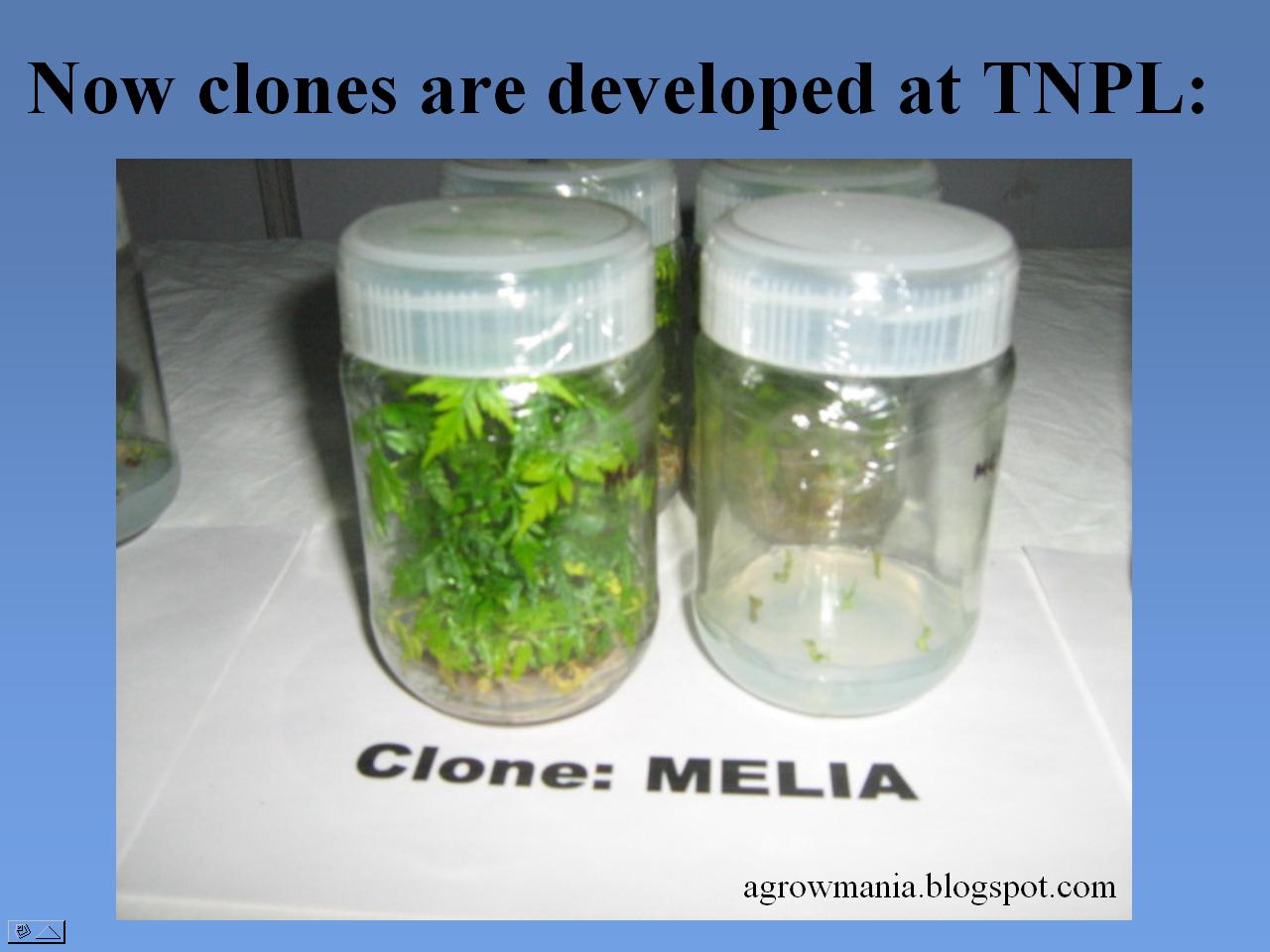
    Melia dubia (Malai Vembu in Tamil, Hebbevu in Kannada, Konda Veppa in Telugu) as alternate pulp wood for TNPL :


    Regards,
    Vishnu Sankar

    Wednesday, December 9, 2009

    Some Melia dubia (Malai Vembu in Tamil, Hebbevu in Kannada, Konda Veppa in Telugu) Pictures:


    Thursday, June 4, 2009

    Melia dubia ( Tamil: Malai Vembu )

    Cultivation of Melia dubia ( Tamil: Malai Vembu )

    Name of the Tree : Melia dubia ( Malai Vembu in Tamil, Hebbevu in Kannada, Konda Veppa in Telugu)


    Have a look at cultivation details of 'Melia Dubia' in the following links also:

    -->
    EARN MILLIONS WITH MELIA DUBIA..........

    Melia Dubia is the fastest growing tree and the wood from this tree is used in Plywood Industry. 400 trees can be planted in an acre that fetch 15-20 lakhs in 6 - 7years.MELIA DUBIA cav.
    Synonym: Melia composita willd. Family: Miliaceae.

    A large tree, attaining a height of 20 m. with a spreading crown and a cylindrical straight bole of 9 m. length X 1.2-1.5 m. girth found in Sikkim Himalayas, North Bengal. Upper Assam, Khasi Hills, hills of Orissa, N.Circas, Deccan and Western Ghats at altitudes of 1500 – 1800 m.
    It grows rapidly and is used for reforestation purposes. (Troup, I 186: Burkill, II 1443: Bor, 253) and yields a useful timber.
    SITE FACTORS

    In its natural habitat the absolute maximum shade temperature varies from 37.5–47.5 C and the absolute minimum from 0–15 C. It does well in moist regions, with a mean annual rainfall exceeding 1000 mm. The mean relative humidity in July varies from 70–90% and in January from 50–80 %.
    TOPOGRAPHY

    It is commonly found in the hills at elevations ranging from 600 – 1800m.
    CULTIVATION
    The rooted saplings are planted onset of the monsoon or during the monsoon.
    The suggested pit size is 2’ x 2’- 0.60m Cube.
    Espacement of 3.5 m x 3.5 m is recommended. This will give better girth in shorter duration.
    GROWTH STATISTICS

    The growth is rapid. GAMBLES’s specimens gave 8 – 12 rings/dm of radius (mean annual girth increment 5.3 – 8 cm) for a Tamil Nadu specimen, and 28 rings/dm (mean annual girth increment 2.3 cm) for a specimen from Bengal. North Kanara in Karnataka specimen showed 12-16 rings/dm of radius (TALBOT, 1909) giving a mean annual girth increment of 4 –5.3 cm. Trees grown in the Calcutta Botanical gardens from specimen from Malbar origin are said to have reached in 7 years an average height of 14m and a girth of 112 cm at breast height. This rate of growth is equivalent to 4 rings/ dm of radius. Even in comparatively dry regions with a rainfall of 750 – 1000 mm, a height of 3 – 4.5 m is obtained in plantations, against 6-7.5 m in more favourable locations.
    UTILISATION
    Physical and Mechanical Properties of the Wood
    The sapwood is grayish-white, usually with a yellowish cast; the ‘ heartwood ’ is light pink to light red when first exposed, ageing to pale russet brown, subject to grey stain. It is lustrous and without characteristic odour or taste.
    It is very light (sp.gr., approximately 0.34, weight at 12 5 moisture content about 336 kg/m3), straight-grained, coarse and somewhat uneven-textured. Annual growth rings are distinct but not conspicuous and number 12-16 / dm of radius.
    Seasoning and Preservation behavior

    The timber seasons well if the logs are converted in a green state, though if left long in the log, it is liable to develop end splitting and decoration. Like many other meliaceous timbers, it contracts very considerably across the grain while drying out. The best method of dealing with the timber is to convert the logs as soon after felling as possible and to open stack the sawn material, preferably undercover to avoid grey stain.
    Present day uses
    The wood is used for packing cases, cigar boxes, ceiling planks, building purposes, agricultural implements, pencils, math boxes, splints and kattamarans. In Srilanka, it is employed for outriggers of boats. It is suitable for musical instruments, tea boxes and the most importantly in making plywood, as the wood is anti-termite by itself.
    The details of quality & technical specifications are as follows.
    1) The logs had very high moisture contents and were green.
    2) All logs were round and good for peeling. Roundness seems to be inherent quality of this tree.
    3) Logs peel easily.
    4) Outturn is excellent – 70% & better in fresh cut logs.
    5) Veneer strong and firm.
    6) Two small logs were peeled for faces. Quality obtained was acceptable.
    7) M.R.Grade Plywood pressed with these veneers and in combination with other veneers gave excellent results.

    (Pearson & Brown, I 243; Macmillan, 96, 213; Cameran, 64; Trotter, 1944, 217; Rama Rao, 73; Indian For., 1948, 74, 279)
    Sudhir e-mail; sudhir vpai@yahoo.com


    --------------------------------------------------------------------------------
    Melia Dubia trees at my farm:


    For more pictures of Melia Dubia : Click here.

      ©Template Blogger Green by Dicas Blogger.

    TOP